
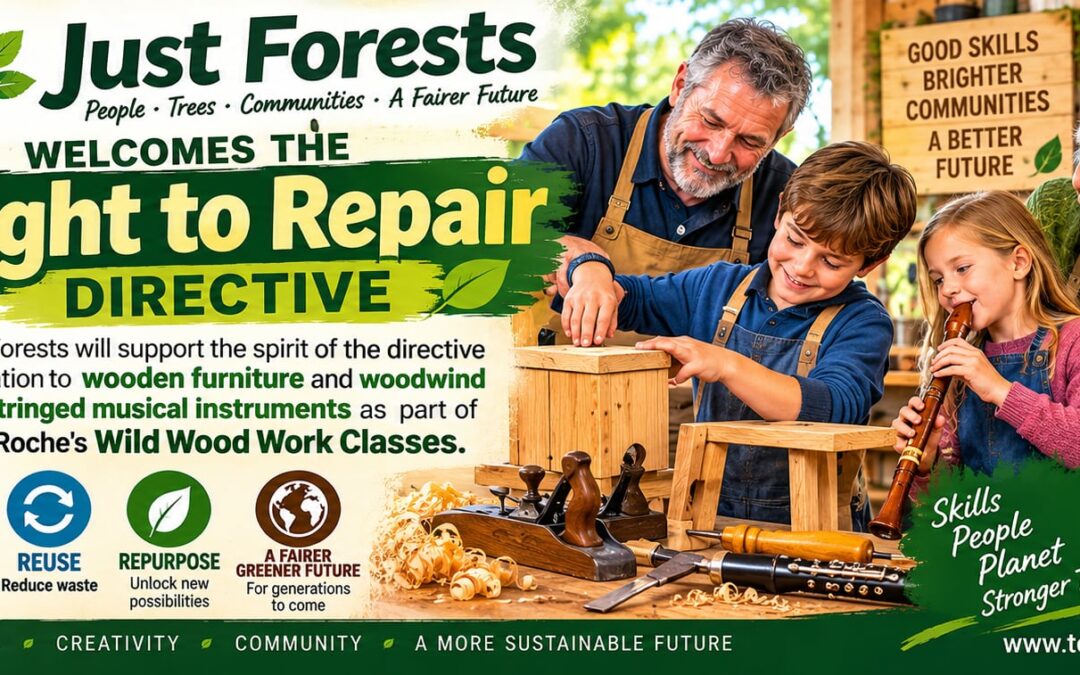
Just Forests welcomes ‘Right to Repair’ Directive.
Just Forests welcomes the EU Right to Repair Directive which came into operation in Ireland on 31 July 2026, following its transposition through national regulations. As the founder of Just Forests, I wish to support the spirit of the Right to Repair Directive by registering my woodworking skills/my services on the https://www.repairmystuff.ie website coordinated by Monaghan County Council.
The world’s forests are under inordinate pressure from a multitude of attacks including illegal-logging, forest fires and global warming. In order to reduce premature disposal of viable goods [such as wooden furniture, woodwind and stringed musical instruments] purchased by consumers and to encourage consumers to use their goods longer, Just Forests believes the Directive should include wooden furniture and all wood-based components where possible. It is necessary to strengthen the provisions related to the repair of goods, allowing consumers to seek affordable repair from the repair service provider of their choice.
Just Forests believes repair should result in sustainable consumption, since it is likely to generate less waste caused by discarded goods, less demand for resources, including energy, caused by the process of manufacturing and sale of new goods replacing defective goods, as well as less greenhouse gas emissions.
This Directive promotes sustainable consumption with a view to achieving benefits for the environment, by promoting a life cycle of goods which includes re-use, repair and refurbishment, while also producing benefits for consumers by avoiding costs associated with new purchases in the short term.
The respect for human rights, including labour rights, is a key priority of the EU’s agenda. In addition to already existing EU policies and laws to address this issue, the proposed regulation sets rules prohibiting the placing on the EU market of goods made by forced labour [and illegal logging]. Forced labour, including forced child labour, continues to be a major global issue, with the ILO estimating the global number of people in a situation of forced labour at around 27.6 million. Combating forced labour and promoting responsible business practices are priorities of the EU's agenda on business and human rights.
Key Details
- Enactment Date: The regulations came into effect on 31 July 2026.
- Applicable Goods: It applies to specific products bought after 31 July 2026 (such as mobile phones, tablets, washing machines, and refrigerators) and certain older products that were already repairable.
- Manufacturer Obligations: Manufacturers must provide repair services at a reasonable price and make spare parts available.
- National Platform: RepairMyStuff.ie serves as the basis for Ireland's national repair platform under the directive.
Background and wider EU context
The Directive forms part of the European Green Deal and wider EU efforts to promote more sustainable consumption. It follows the New Consumer Agenda and the Circular Economy Action Plan and supports the EU’s ambition to move towards a climate-neutral and circular economy.
The Right to Repair Directive works alongside other EU initiatives, including the Green Claims Directive, the Green Transition Directive and the Ecodesign for Sustainable Products Regulations.
These measures work together to support more sustainable products and better consumer information. Ecodesign rules help make products more durable and repairable, while the Right to Repair Directive helps ensure repairs are actually available to consumers.